Adjust map brightness for easier reading in bright rooms.
Feature comparison
Manufacturer figures for the aircraft you have plotted.
Figures reflect manufacturer published data at typical cruise with standard assumptions and are provided without guarantee. Estimated flight times exclude taxi, routing, ATC and winds.
Request a quote
No AI. Real people. Real prices. An aviation specialist responds 24/7.
Range, by the numbers
How far can you go?
Every class in the Fly Alliance fleet answers a different mission. Pick a departure point above and we will draw the great-circle ring for each one — the honest picture of where it takes you nonstop, and where a fuel stop starts to make sense. Distances are great-circle; your specialist confirms routing and timing for the day you fly.
Good to know
Aircraft range FAQs
What is a great-circle range ring?
A great-circle ring shows every point an aircraft can reach flying the shortest path over the curved surface of the earth from its departure airport. Because it is drawn on a sphere and then projected onto a flat map, the ring looks distorted — wider near the poles, narrower near the equator. That distortion is correct: the ring you see is the true set of reachable points, not a simple drawn circle.
Why are there two rings for each aircraft?
The solid ring is the manufacturer's maximum range figure. The dashed ring is roughly what the aircraft can actually fly while holding the fuel reserves required by regulation and by our safety standards — about 85% of maximum. Treat the dashed ring as the honest one: destinations inside it are realistically nonstop. Between the two rings a nonstop may still be possible on a good day with a light payload and favourable winds, but plan for a technical stop.
How far can a light jet fly?
A modern light jet such as the Citation CJ4 covers roughly 1,900 to 2,200 nautical miles — comfortably New York to Denver, Miami to Chicago, or Los Angeles to Seattle. Light jets earn their keep on short-runway airports closer to your destination, which often saves more time on the ground than a bigger jet saves in the air.
How far can a heavy jet fly?
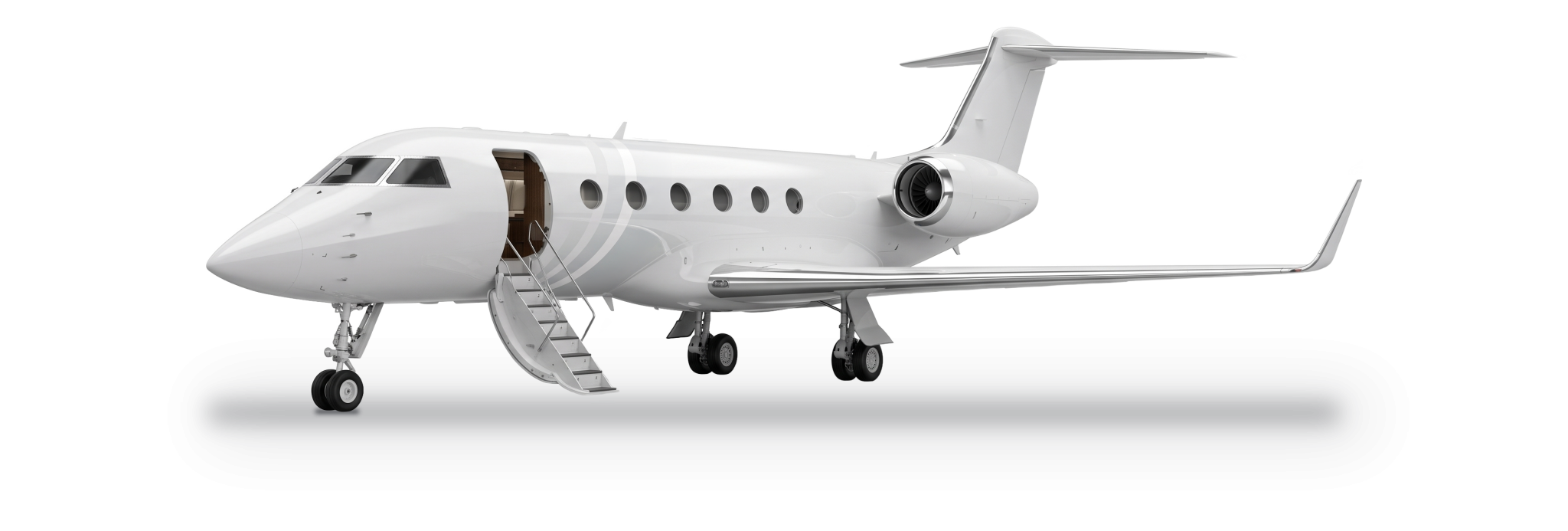
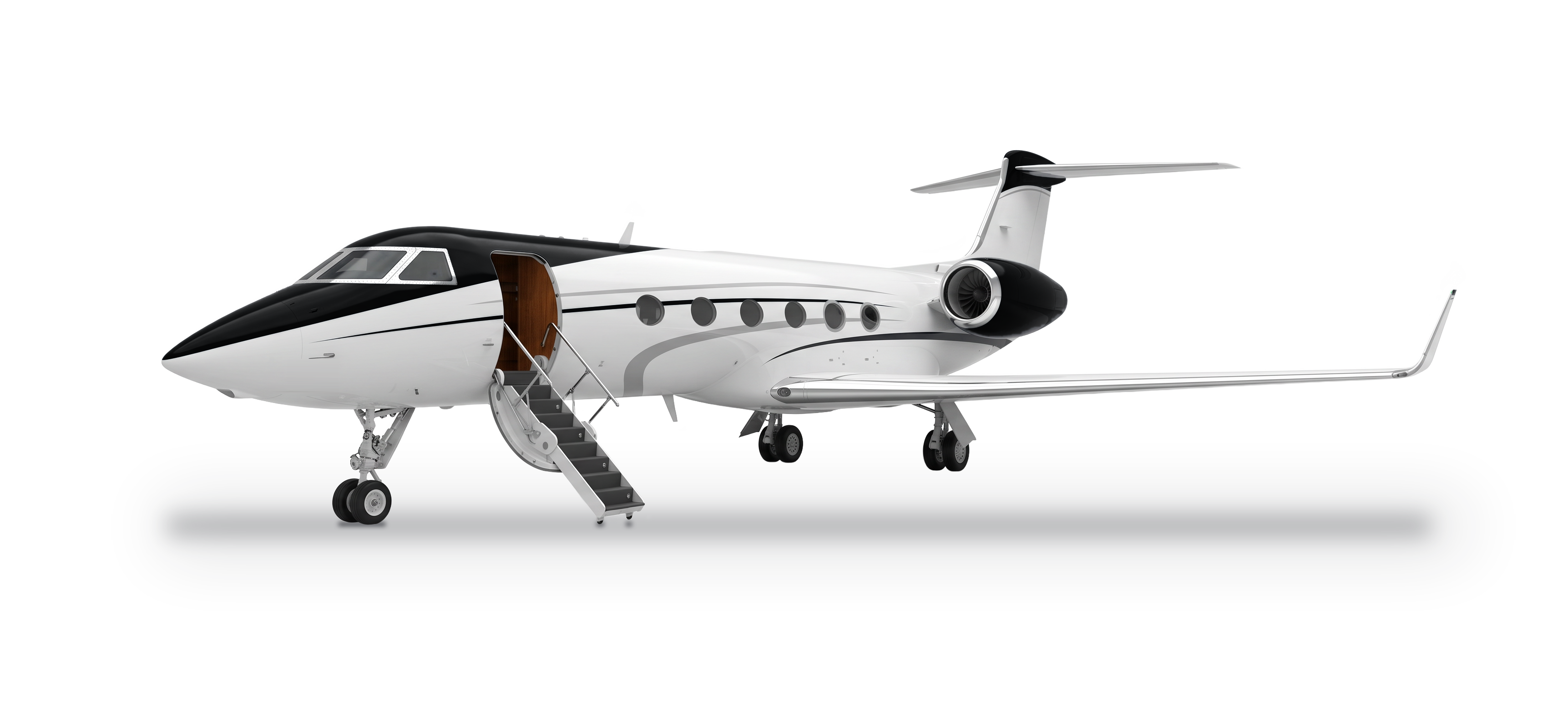
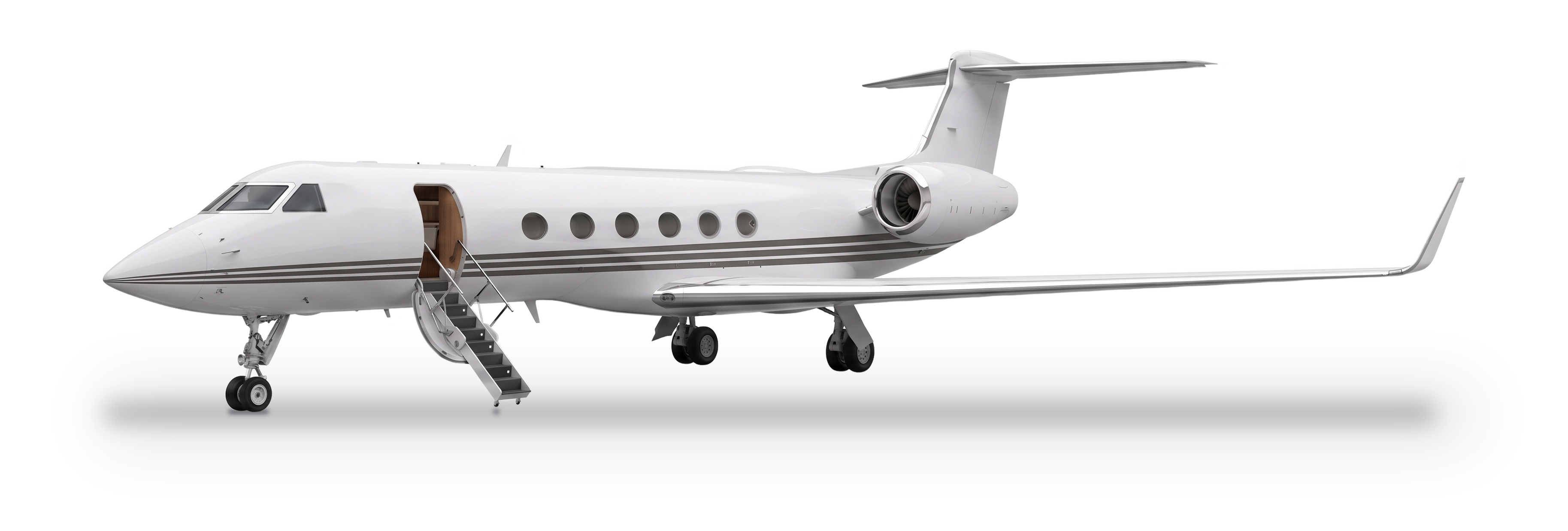
Heavy jets in our fleet — the Gulfstream GIV-SP and Falcon 2000 — run from roughly 3,100 to 4,200 nautical miles. That covers transcontinental US routes with ease, and the GIV-SP handles New York to most of Western Europe nonstop with a normal passenger load.
Which aircraft fly transoceanic nonstop?
Our ultra long range aircraft — the Bombardier Global Express and Gulfstream GV — fly beyond 6,000 nautical miles. New York to Dubai, Los Angeles to London, Miami to São Paulo: those missions are nonstop in a Global or a GV, and both cabins are built for you to arrive rested.
What reduces an aircraft's real-world range?
Passenger and baggage weight, headwinds, hot or high-altitude departure airports, short runways, required alternates and ATC routing all reduce usable range. A full cabin on a hot day out of a short field can trim several hundred nautical miles from the published figure. Our team plans every leg against the actual conditions on the day, not the brochure number.
Does a fuel stop cost me much time?
Less than most people expect. A planned technical stop is a quick turn and you stay on board while the aircraft is refuelled. On plenty of routes it is still faster door to door than repositioning a larger jet to your departure airport, and it can be materially less expensive. Your specialist will price both options and show you the real trade-off before you decide.
Why don't you show estimated flight times?
Because an honest one does not exist until the day you fly. Winds aloft, ATC routing, departure slots, weather deviations and the actual payload on board each move a block time by a meaningful margin, and no number on a web page can know any of them. Distance is the fact that does not change, so distance is what we show. When you request a quote, your specialist gives you a real block time built from the routing and the forecast for your date.
Why recommend a category rather than a specific jet?
Because the right answer on the day depends on what is available and where it is positioned. A category — light, midsize, super midsize, heavy or ultra long range — tells you the capability your trip needs: the range, the cabin and the seats. Your specialist then assigns the specific aircraft from that category that is best positioned for your departure, which is often what makes the difference on price.
No AI. Real people. Real prices.
Talk to a real person
Tell us the route and we will come back with the aircraft, the routing and the number — usually the same day. Specialists on call 24/7, across every timezone we operate in.